
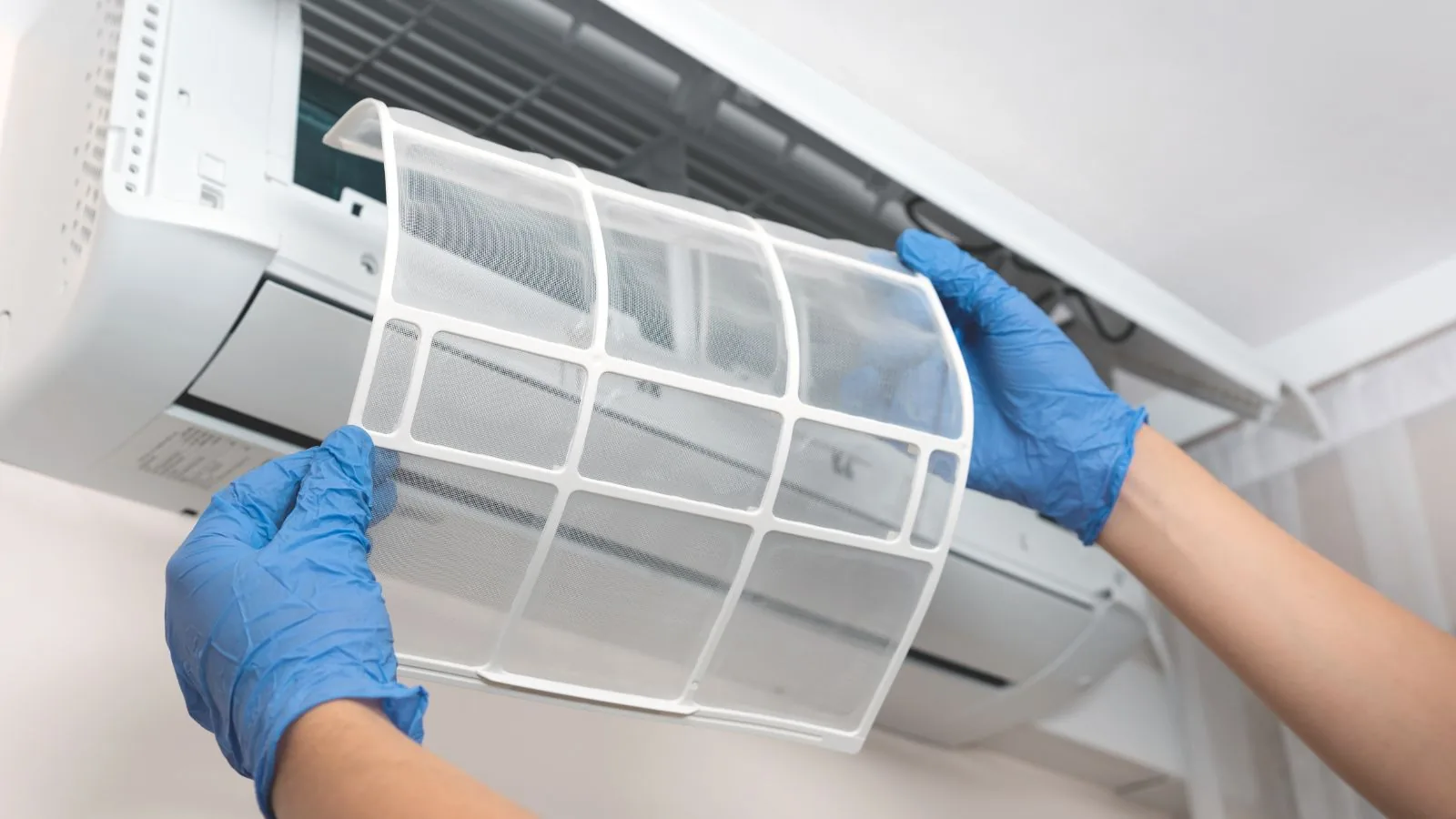
Air conditioners remove water from the air, and when the drain path fails, that water ends up in the house. AC leak water damage repair in Pequannock covers the drying and cleanup after a clogged condensate line, a overflowing drain pan or a frozen evaporator coil that thawed into the ceiling below an attic unit or the floor around a closet air handler.
Turn the system off at the thermostat, since running it adds more water. Place a bucket under any drip, and if a ceiling is bulging, leave it alone and call. HVAC repair itself belongs to an HVAC technician, and the water damage side belongs to us.
Why air conditioners leak indoors
- A condensate drain line clogged with algae and debris
- A cracked or rusted drain pan under the air handler
- A frozen evaporator coil that melts when the unit shuts off
- A disconnected or poorly sloped drain line
Where the water goes
Attic air handlers drip onto the ceiling below, and the stain often shows up in a hallway or bedroom far from the unit. Closet and basement units wet the floor and the bottom of nearby walls. Because condensate runs whenever the system cools, a slow leak can run all summer before it is noticed.
Insulation above a ceiling soaks and sags, and the drywall below weakens and stains.
What to do before help arrives
- Turn the thermostat to off so the unit stops making more condensate.
- Do not touch a ceiling that bulges, and keep people out from under it.
- Leave the air filter and coil alone until an HVAC technician has looked, since a frozen coil can melt onto the floor.
How we handle it
- Confirm the system is off and the source is stopped, with the HVAC company handling the repair.
- Check moisture in the ceiling, walls and flooring with a meter.
- Remove soaked insulation and any drywall that has lost strength.
- Dry the area with air movers and dehumidifiers until readings match a dry reference.
Ceiling and wall repairs
Once the structure is dry, drywall is patched and the surface made ready for paint. The sequence is similar to a roof leak, so see ceiling water damage repair for the details of ceiling cuts and sagging drywall.
Signs an air conditioner is leaking inside
A ceiling stain that grows in humid weather, water in the drain pan or on the floor of a closet, and a musty smell near vents are common signs. A system that runs but blows weak air may have a frozen coil, which melts into the drain pan faster than it can drain. Ice on the lines or the coil is a warning to turn the system off.
Check the condensate line outlet, which is usually a small pipe that exits near the unit or the foundation. If it is dry on a humid day while the system runs, the line may be blocked.
How the water reaches finished spaces
An attic unit sits above living space with only insulation and drywall between. When the pan overflows, water soaks the insulation, and the drywall below sags. A unit in a basement or utility closet leaks onto flooring and the base of walls. Water that follows ducts can also show up at a register.
Because it is condensate, the water is usually clean at first. It can pick up dust and growth from the pan, and long-term leaks can go through the damage categories described in the S500 standard, which is why speed matters.
Preventing a repeat
- Have an HVAC technician clear and flush the condensate line each cooling season.
- Ask about a float switch that shuts the system off when the pan fills.
- Change the air filter on schedule so the coil does not freeze.
- Look at the drain pan during the season, and wipe away slime.
What affects the cost
| Factor | Why it matters |
|---|---|
| How long it leaked | Long drips wet more insulation and framing |
| Location of the unit | Attic leaks affect ceilings, closet leaks affect floors |
| Materials removed | Insulation and drywall are removed and replaced |
| Drying days | Dense materials take longer |
| Rebuild scope | Patching and painting are separate steps |
Call (833) 521-1033. Scope and price are explained before work starts.
Insurance notes
Many policies treat a sudden overflow differently from long-term seepage. Keep the HVAC invoice that names the cause, photograph the stains and wet insulation, and report the loss promptly.
AC dripping inside
Turn the system off and call. Tell the dispatcher where the unit sits and where the stain is. Scope and price are explained before work starts.
Questions about AC leak water damage in Pequannock
Can I keep running the AC if it drips a little?
No. Running it adds water. Turn it off until an HVAC technician clears the drain.
Do you repair the air conditioner?
No. An HVAC contractor does that. We dry the structure and repair the water damage.
Why is there a stain far from the unit?
Water follows joists and wiring. The stain may sit well away from the actual drip.
Serving Pequannock and nearby towns
AC leak calls come from Pequannock, Pompton Plains, Riverdale, Lincoln Park and Pompton Lakes. If the water came from an appliance instead, see appliance leak water damage.