
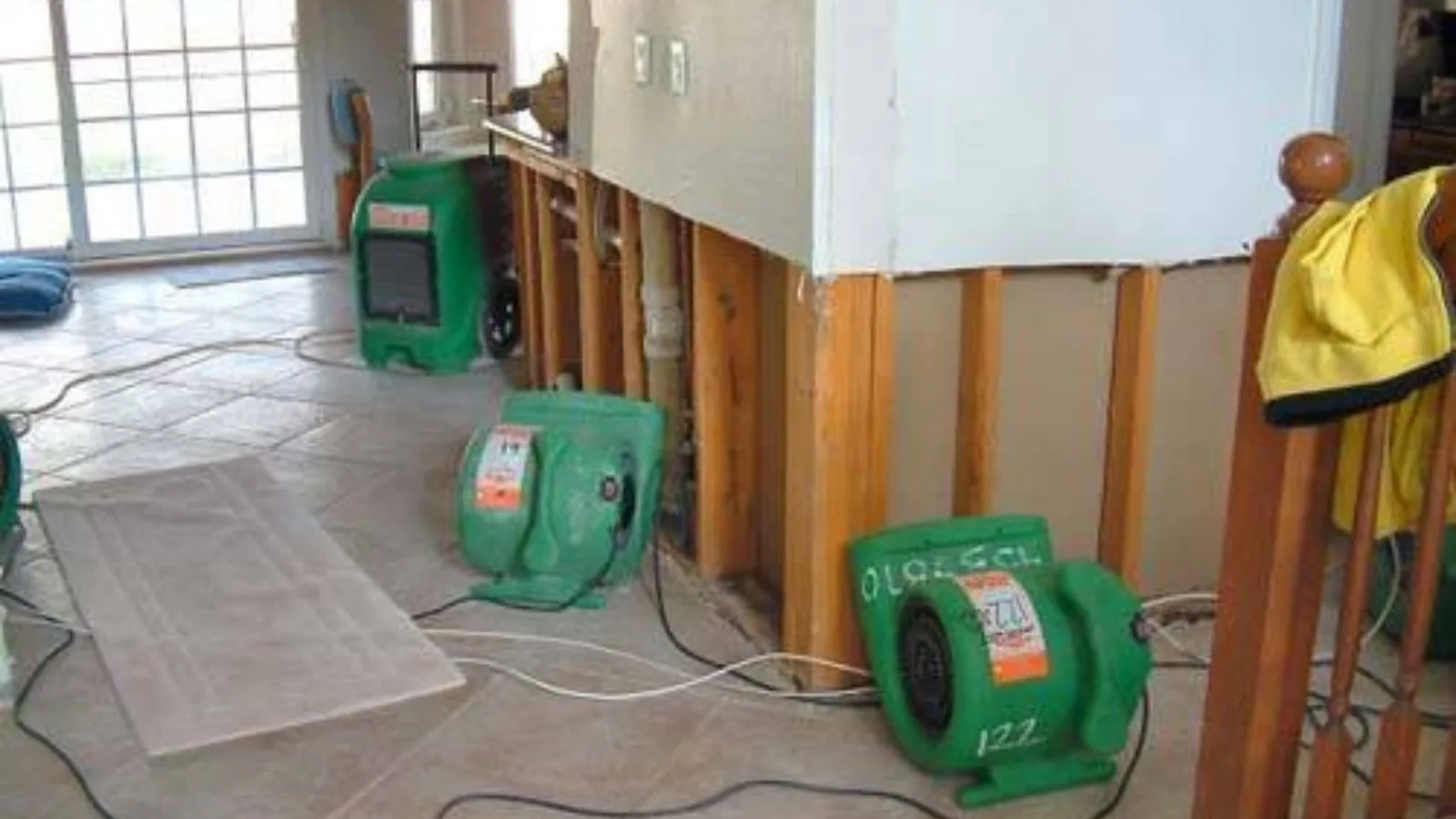
Drywall is paper and gypsum, and both take on water readily. Wall and drywall water damage repair in Pequannock begins by finding how high the water wicked, since the wet line on the surface is usually lower than the true wet line inside the wall. Wet drywall that is soft, stained or crumbling is removed, and the cavity behind it is dried.
If a wall is bulging or dripping, do not poke it. Place a bucket, move furniture away and call. Turn off power to the area if outlets in the wall are wet.
Signs that a wall is wet inside
- A stain, ripple or bubbled paint
- A soft spot when pressed lightly
- Baseboard that has swollen or pulled from the wall
- A musty smell with no visible source
Why the wet line lies
Drywall wicks water upward, often a foot or more above the visible mark. Insulation inside the wall holds water against the studs, and the bottom plate can stay wet longer than the drywall. A meter reading at several heights shows the true extent.
What happens after the leak is stopped
- Moisture mapping shows the wet area on the wall and behind it.
- Drywall is cut above the wet line and removed, along with wet insulation.
- Studs and plates are dried with air movers and dehumidifiers, with readings logged.
- Once dry, the wall is closed with new drywall, taped and finished for paint.
Can wet drywall be dried in place?
If the wall is lightly wet with clean water and the drywall is still firm, it can sometimes be dried through small openings. If it is soft, stained from dirty water or has been wet more than a day or two, it is usually cut out. The paper face grows mold quickly when it stays damp.
Drywall types and how they react
Standard paper-faced drywall is the most common in houses and the most vulnerable. Moisture-resistant board, used in some bathrooms, handles brief wetting better, but it is not waterproof. Plaster over lath, found in many older houses, is heavy and slow to dry. Each reacts differently, and a crew will adjust the drying plan.
Paper-faced boards can grow mold on the paper after a day or two in damp conditions, so any board that stayed wet should be checked, and removed if the readings stay high.
Insulation and electrical in a wet wall
Wet batt insulation sags and holds water against the framing, and it is usually removed. Spray foam is different, since it does not absorb water, though it can trap moisture behind it. Outlets and switches in a wet wall should be treated as unsafe until an electrician checks them.
Before you paint
- Wait for dry readings in the drywall and the framing.
- Use a stain-blocking primer on any area that had a stain.
- Match the texture on a patched area before painting.
- Check again after a week for new stains.
What affects the cost
| Factor | Why it matters |
|---|---|
| Height of the wet line | More wicking means more drywall cut out |
| Insulation and framing | Wet insulation is removed and replaced |
| Water category | Dirty water means removal |
| Drying days | Cavities dry slowly |
| Finishing | Taping, texture and paint are separate steps |
Call (833) 521-1033. Scope and price are explained before work starts.
Insurance notes
Photograph the wall before any cuts and keep the moisture readings. Ask your insurer how it handles the paint and finishing. Drying details are on structural drying and dehumidification, and bubbled paint is explained in our guides.
Wall is wet
Move furniture away and call. Tell the dispatcher where the stain is and where the water came from. Scope and price are explained before work starts.
Questions about wall and drywall water damage in Pequannock
Do I have to cut the drywall out?
Not always. Firm, lightly wet drywall can sometimes be dried. Soft or dirty-water drywall is cut out.
Why cut above the stain?
Water wicks upward behind the surface, so the cut goes past the true wet line.
Do you paint after repairs?
The wall is finished and made ready for paint. Painting is usually a separate step.
Serving Pequannock and nearby towns
Wall calls come from Pequannock, Pompton Plains, Riverdale, Lincoln Park and Pompton Lakes. When the wet wall sits under a stained ceiling, see ceiling water damage repair.