
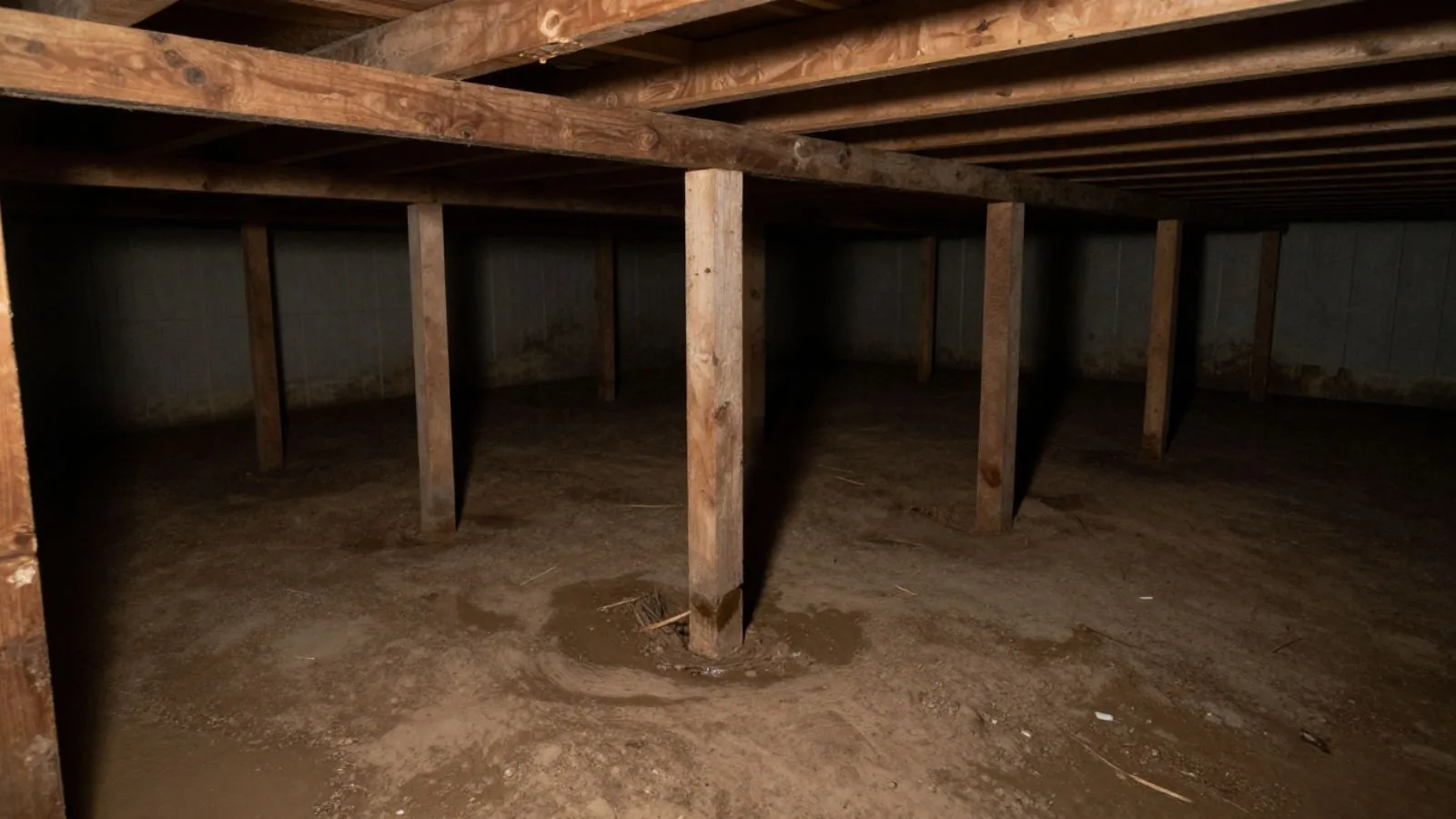
A crawl space is a low void under a floor, and when water gets into it, nobody sees it for days. Crawl space water damage cleanup in Pequannock means pumping out standing water, checking the joists and subfloor with moisture meters, removing wet insulation and drying the whole space. We do not claim that crawl spaces are common in the township, because no official local figure was found, so this page is written around the mechanism.
If you can safely look into the crawl space and see standing water, do not go in. Water can hide wires and low pipes. Call our line, tell us what you see and shut off the water supply if a pipe is the source.
How water gets into a crawl space
- A supply or drain line that breaks or leaks under the floor
- Groundwater or surface runoff after heavy rain or snowmelt that pushes through vents or the foundation
- A broken irrigation line or backflow, which is a real caller scenario
- A washing machine or HVAC condensate drain that empties into the crawl space
What water does down there
Wet insulation hangs on the underside of the floor and holds water against the subfloor. Wood joists absorb moisture slowly and dry slowly. A vapor barrier that is torn, wet or missing allows ground moisture to rise.
Because no one lives in a crawl space, odors and dampness are often the first sign you get, along with a floor that feels soft or cold overhead.
How the cleanup works
- A trained technician checks the entry safely and tests moisture levels with a meter.
- Submersible pumps remove standing water.
- Wet insulation is removed and bagged, since it will not dry in place.
- Air movers and a dehumidifier dry the space, and readings are logged until the wood reaches the dry standard.
The method follows the ANSI/IICRC S500 drying approach, covered more on the structural drying and dehumidification page.
Cleanup is not waterproofing
Drying a crawl space removes water that is already there. It does not stop water from coming back. If water enters through the foundation, a waterproofing or drainage contractor addresses that, and we will say so rather than promise a fix we do not offer.
Signs of water in a crawl space you cannot see
A cold or soft spot in the floor above, a musty smell that rises through the registers and a rise in indoor humidity can all point to water below. Sagging insulation seen from the hatch, rust on ductwork and dark staining on joists are other clues. Pests that appear in numbers, such as ants and silverfish, often follow moisture.
None of these proves a leak, which is why readings matter. A technician checks the moisture content of joists and subfloor and compares it with a dry reference taken from an unaffected area of the same house.
Why speed matters under the house
Air in a crawl space moves slowly, so wet materials dry slowly too. Wood that stays damp for days is a setting for mold and decay, and the EPA advises drying water-damaged materials in the first 24 to 48 hours where possible. Ductwork and wiring that run through the space can also be wet by the time anyone looks.
If the space holds ducts, wet insulation around them can spread damp air through the house. That is one reason the dehumidifier is sized for the whole space and not just the wet corner.
What affects the cost
| Factor | Why it matters |
|---|---|
| Water depth and area | More water means more pumping time |
| Insulation removed | Wet insulation is removed and replaced |
| Access to the space | Tight entries slow the work |
| Drying days | Joists and subfloor dry slowly |
| Rebuild scope | Insulation, vapor barrier and flooring may be replaced |
Call (833) 521-1033 for your situation. Scope and price are explained before work starts.
Insurance notes
A sudden supply-line break that floods a crawl space is often covered for the water damage, while groundwater seepage is often excluded. Photograph the water level and the wet insulation before it is removed, and keep plumber invoices.
Water under the house
Tell the dispatcher what you can see from the access hatch and where the water came from. Scope and price are explained before work starts.
Questions about crawl space water damage in Pequannock
Is it safe to look into a flooded crawl space?
Look from the hatch only. Do not enter if there is standing water and any wiring or pipes within reach.
Will drying stop water from coming back?
No. Drying removes existing moisture. Stopping groundwater entry is a drainage or waterproofing job.
Can wet crawl space insulation be saved?
Rarely. Wet batts hold water against the subfloor and are usually removed.
Serving Pequannock and nearby towns
Crawl space calls come from Pequannock, Pompton Plains, Riverdale, Lincoln Park and Pompton Lakes. If a below-grade finished room is the problem instead, see basement water damage cleanup. For a leak that began under a slab, the slab leak water damage page applies.