
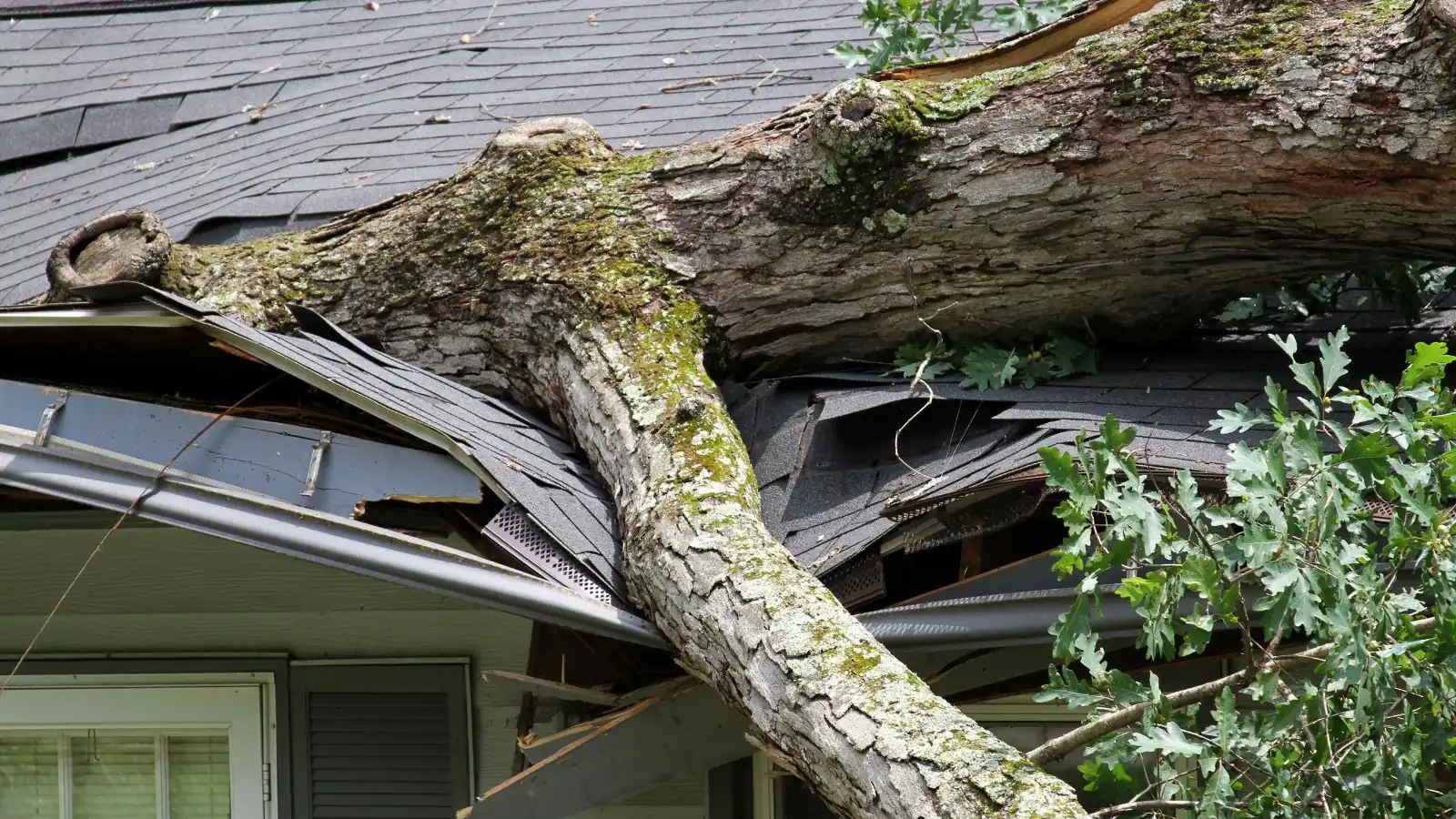
Storm water damage means water that entered through the building envelope, such as a damaged roof, a failed window seal or siding blown loose by wind. It is different from rising flood water, which comes from the ground. Emergency storm water damage cleanup in Pequannock removes standing water, dries the structure and protects what is left until repairs can be made.
When the storm is still active, do not climb onto a roof or go outside to inspect. Move belongings away from wet areas, place buckets, and shut off power to wet rooms if you can do so safely. Then call our 24/7 line so the drying plan can start as soon as it is safe.
When storm damage is an emergency
A tree limb through a roof, shingles blown off during high wind or a window broken by debris lets rain flood rooms fast. The most urgent problems are electrical exposure, ceilings that fill with water and standing water on the floor.
A tarp or board-up may be needed to keep more rain out. That is a temporary measure, and the roof or window itself is repaired by a roofer or glazier.
Storm water versus flood water
| Source | Example | Page |
|---|---|---|
| Through the roof or siding | Wind-driven rain, a fallen limb | This page |
| Rising from the ground | River or surface flooding | Flood damage cleanup |
| Plain roof leak with no storm event | Aging flashing or shingles | Ceiling water damage repair |
Rainwater that enters from above starts cleaner than flood water, though it can pick up dirt from roofing and insulation.
What to do before help arrives
- Stay off the roof and out of the yard while the storm is active.
- Do not touch downed lines, and treat any wet outlet as live.
- Place buckets and move belongings, but leave a bulging ceiling alone.
What storm cleanup involves
- Safety check for electrical hazards, loose debris and unstable ceilings.
- Extraction of standing water and removal of soaked insulation and ceiling drywall.
- Moisture mapping through attic, ceilings, walls and floors to show how far water traveled.
- Drying with air movers and dehumidifiers, with readings checked each visit.
Why storm damage keeps getting worse after the rain stops
Wet insulation in an attic can hold water against the roof deck and drywall long after the storm. Rain driven into a wall cavity may not show on the inside for days. A moisture meter finds those hidden areas before stains and swollen trim appear.
Where storm water hides
Rain driven through a roof does not stop at the first ceiling. It soaks attic insulation, runs along rafters, drops into wall cavities and shows up as a stain far from the opening. In a two-story house, water can pass through a second-floor ceiling and a first-floor ceiling before anyone sees a drip.
Window and door openings let rain in at the sill, where it wets the subfloor and the bottom of the wall. Wind-driven rain behind siding may sit in the sheathing for weeks. A moisture meter and a thermal camera find these spots, and they give you something to show your insurer.
Temporary protection while you wait
- Move belongings and furniture away from the wet area and cover what you cannot move with plastic.
- Use buckets under drips and empty them often, since a full bucket is heavy.
- Keep people out from under a ceiling that bulges or sags.
- Photograph the opening and the wet rooms before any tarp goes on.
- Ask a roofer or a board-up service to cover the opening, and keep the receipt.
Check your coverage first
The New Jersey Department of Banking and Insurance advises policyholders to report losses promptly, make necessary temporary repairs and keep receipts. Wind and rain damage through the roof is usually covered under a homeowners policy, while rising flood water is not. You are not required to use a contractor your insurer recommends.
What drives the cost
| Factor | Why it matters |
|---|---|
| Opening in the building | A larger breach lets in more water |
| Rooms affected | Water moves from attic to rooms below |
| Insulation and ceilings removed | Soaked materials are usually removed |
| Drying days | Attic and wall cavities dry slowly |
| Rebuild scope | Roof, siding and interior repairs are separate trades |
Call (833) 521-1033. Scope and price are explained before work starts.
Standards behind this work
The ANSI/IICRC S500 standard guides drying after storm water, and the EPA mold guidance applies to wet insulation and drywall.
Storm water inside
Tell the dispatcher where the water entered and how many rooms are wet. Scope and price are explained before work starts.
Questions about storm water damage in Pequannock
Do you repair the roof or windows?
No. A roofer or glazier does that. We extract, dry and repair the interior damage.
Will insurance cover storm damage?
Wind and rain damage is often covered, while rising flood water is usually excluded. Check your policy.
Should I wait until the storm ends to call?
Call when it is safe to talk. The drying plan can start as soon as it is safe to work.
Do you handle storm water damage emergencies at night or on weekends in Pequannock?
Yes. Storms hit at night and on weekends, and the line is answered 24/7.
Serving Pequannock and nearby towns
Storm calls come from Pequannock, Pompton Plains, Riverdale, Lincoln Park and Pompton Lakes. Rooms below a wet attic often need the steps on the ceiling water damage repair page.