
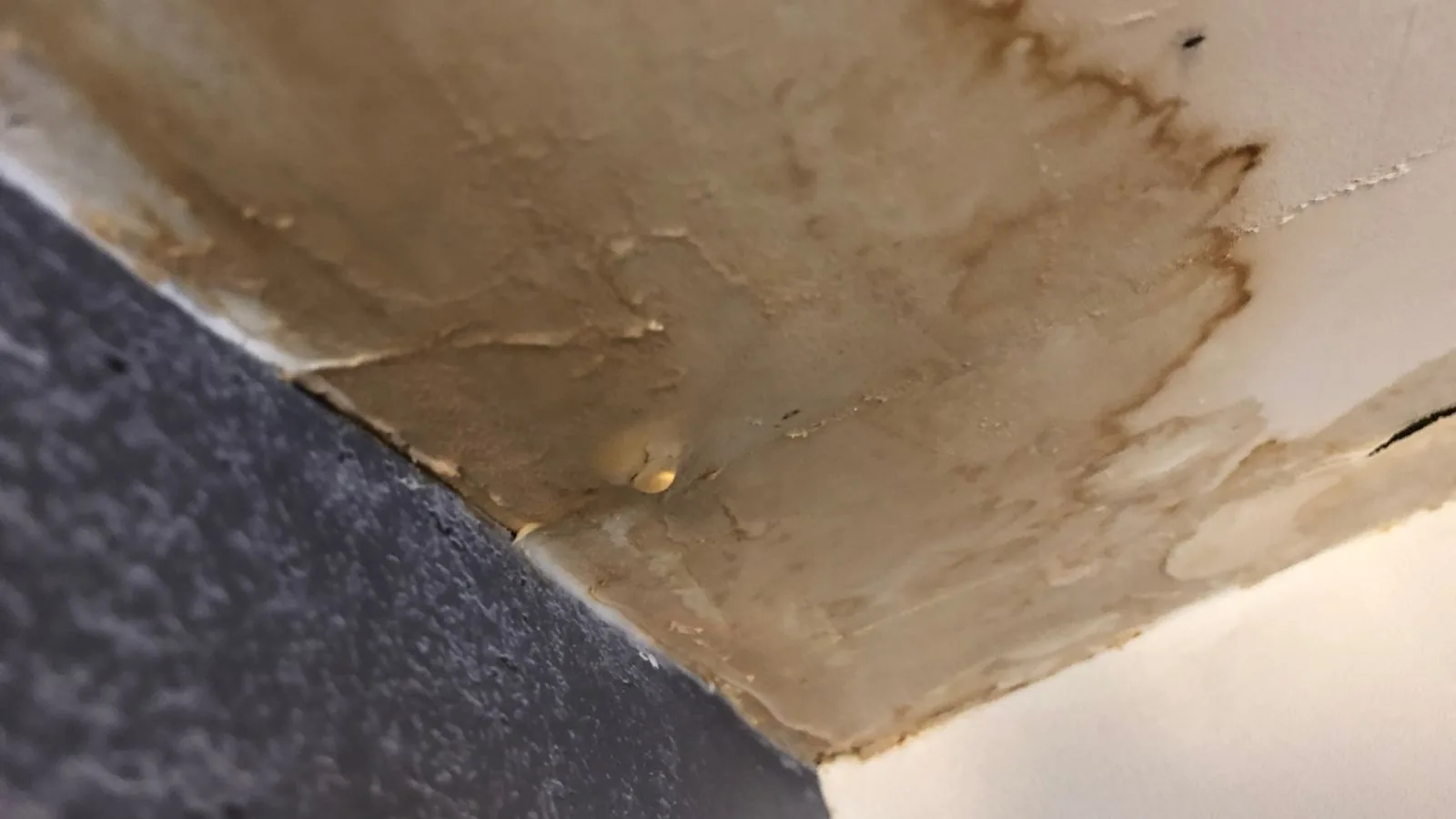
Paint bubbles when something pushes it off the surface from behind. Water vapor and liquid water are the usual cause on interior walls and ceilings. A bubble the size of a coin is a warning, and a wide patch of peeling paint can mean the wall has been damp for a long time.
This guide explains how to tell moisture bubbles from poor adhesion, where the water usually comes from and what repair makes sense.
Why water makes paint bubble
Paint is a thin film. When water enters drywall or plaster, it moves outward toward the dry surface and pushes the paint away from it. The bubble fills with water or vapor. When the bubble dries, the paint cracks and peels, and the wall behind it often has a stain or a soft spot.
Moisture or a bad paint job?
| Clue | Points to moisture | Points to adhesion or prep |
|---|---|---|
| Location | Near a bath, kitchen, roof line or exterior wall | Anywhere, often in a pattern like roller marks |
| Feel | Soft, damp or cool under the bubble | Dry and firm |
| Underside of peeled paint | Stained, damp or moldy | Clean and dusty |
| Smell | Musty | None |
| Returns after repainting | Yes, the source is still active | No |
Common sources behind a bubbled wall
- A leaking supply or drain line inside the wall
- A roof, flashing or window leak that runs down the wall
- Shower or tub surrounds with failed caulk or grout
- Condensation in a poorly ventilated bathroom or laundry room
- Moisture rising through a below-grade wall
What not to do
Do not paint over bubbles. A new coat hides the problem and traps moisture, and the paint will fail again. Do not pop a large bubble on a ceiling without a bucket, since it can hold more water than it looks. Do not use a stain-blocking primer as a fix for a live leak.
What to do first
- Find the source and stop it, which may mean a plumber for a pipe or a roofer for a leak.
- Check moisture on and around the area with a meter.
- Dry the wall with airflow, and remove drywall that is soft or stained.
- Let it dry fully before patching, priming and painting.
Repair and repainting
Once the wall reads dry, the drywall is patched, primed with a stain-blocking primer and painted. For a larger area, wall and drywall water damage repair explains how wet drywall is cut and dried. If the bubble is on a ceiling, the same logic applies as on ceiling water damage repair.
Questions about bubbled paint in your own house? Talk it through with the dispatcher. ☎ (833) 521-1033
When to call for readings
If the bubbled area is larger than your hand, appears again after repainting, or has a musty smell, get a moisture reading. A professional meter and thermal camera can trace the source without opening the wall in several places.
Bathrooms and ventilation
Steam is water, and a bathroom without a working fan pushes it into walls and ceilings. Paint on the ceiling over a shower is the first place bubbling shows up. A fan that vents to the outside, and runs during and for some time after a shower, lowers the moisture load. If the fan vents into the attic, the moisture ends up in the roof structure instead.
Check caulk around the tub and shower. A gap lets water into the wall, where it shows up as bubbles at the lower edge of the wall or on the ceiling below.
Exterior walls in winter
In cold weather, warm indoor air meets a cold exterior wall and condenses. Paint on the inside of such a wall can peel, especially behind furniture and in corners. This is moisture too, but it comes from indoor humidity, and the fix is ventilation and humidity control more than a repair. A reading shows whether the moisture is from a leak or from condensation.
A checklist before you repaint
- Find the source and confirm it is fixed.
- Scrape off loose paint and check the surface underneath for softness.
- Take a moisture reading on the wall and on a dry wall nearby for comparison.
- Let the wall dry fully, which can take days, and recheck.
- Prime with a stain-blocking primer, then paint in thin coats.
- Check the area again after a few weeks and after the next heavy rain.
A note on lead paint
Houses built before 1978 may have lead paint. Scraping or sanding old paint can release lead dust, which is a health risk, especially for children and pregnant women. If your house is older, test the paint before you scrape, and follow safe work practices or hire a trained professional. This is separate from the water issue, but it affects how you handle peeling paint.
Repainting with the right primer
A stain-blocking primer seals stains and gives new paint a clean base. Apply it only on dry surfaces. Two thin coats of paint look better and last longer than one thick coat.
If water is already in the house, do not wait on bubbled paint. Call now. ☎ (833) 521-1033
A note on standards
The EPA guidance on moisture and mold says controlling moisture is the key to controlling mold, and the ANSI/IICRC S500 standard guides drying of wet drywall.
Bubbled paint in Pequannock homes
Older Pequannock homes with plaster or mixed wall materials may show moisture differently from newer drywall, and bathrooms with weak ventilation are a common source. Homes in Pompton Plains and Riverdale built before modern bath fans were required often show it near showers. Winter condensation on cold exterior walls can also cause peeling, so check for a leak before assuming a roof problem. See burst pipe water damage if a pipe is suspected.
Questions answered
Can I just scrape and repaint?
Only after the cause is fixed and the wall is dry. Otherwise the paint will fail again.
Does bubbled paint always mean a leak?
Not always, but moisture is the most common cause. A meter reading tells you.
Is it safe to touch mold under peeled paint?
Avoid disturbing it. Small areas can be cleaned with care, and larger areas deserve professional advice.
Why does paint bubble on my Pequannock bathroom ceiling?
Steam from showers with weak ventilation is a common cause, and a leak from above is another. Run the fan, check for stains and test the surface for moisture.