
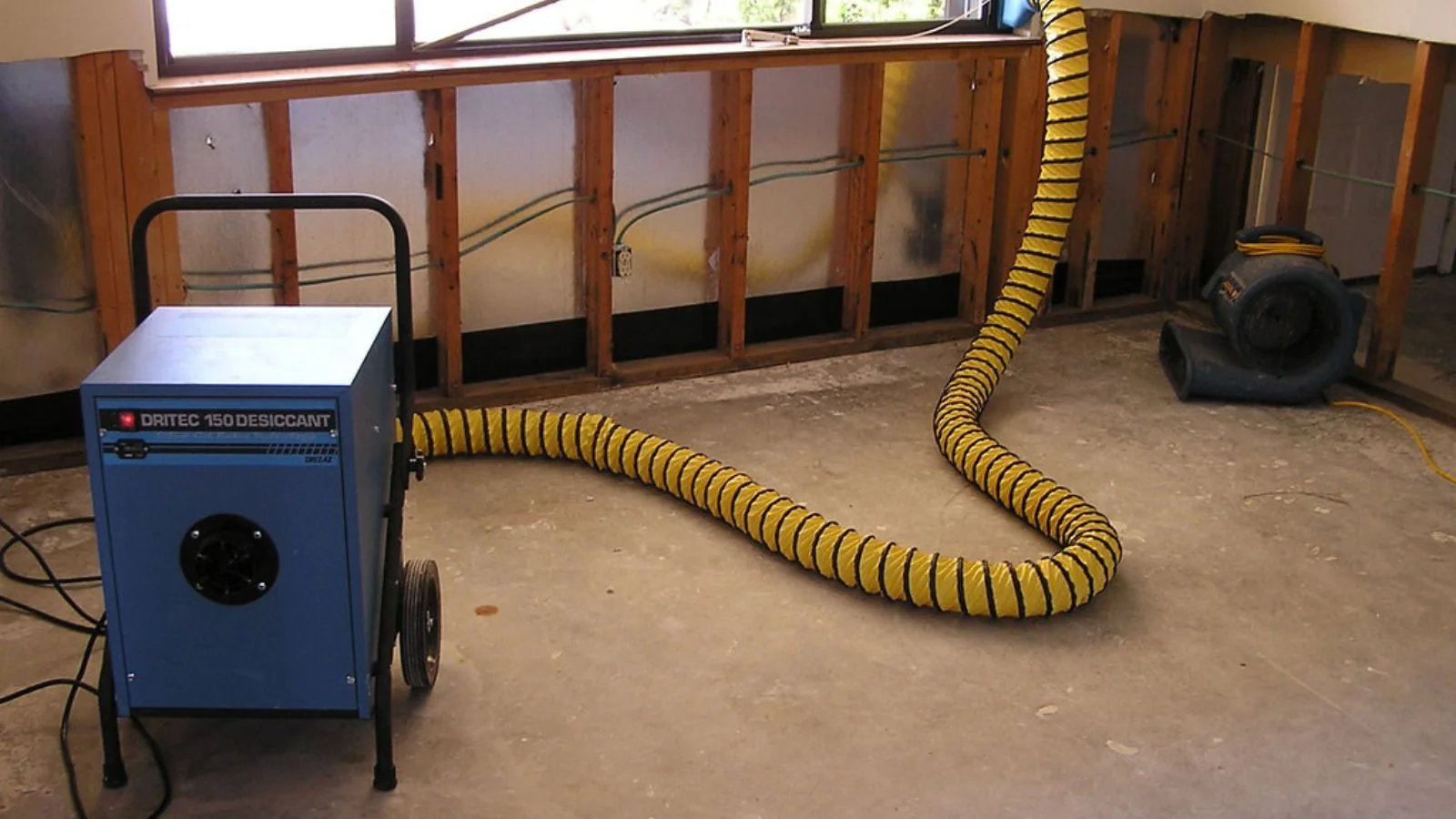
Not every wet floor needs a restoration crew. A cup of water on tile does not. A washing machine that flooded a finished basement does. The question is how much water, what kind and how long it has been there.
This guide gives you a simple way to decide, and a checklist for the cases you can handle yourself.
When you can handle it yourself
- The water is clean, from a supply line or a sink, and the source is stopped
- The area is smaller than a few square feet and has been wet less than a day
- The material is hard and non-porous, such as tile or sealed concrete
- You can reach all wet surfaces and dry them with towels and airflow
When to call a professional
- Water has soaked carpet, pad, drywall or insulation
- The water may be contaminated, from a drain, a toilet or a flood
- The loss is large, or it came from a ceiling or through walls
- It has been wet for more than a day or two, or you smell must
- Wet electrical outlets, appliances or a panel are involved
Side by side
| Situation | DIY may work | Call a pro |
|---|---|---|
| Spilled pot on a kitchen tile floor | Yes, wipe and air dry | No |
| Washing machine hose leak on a vinyl floor | Maybe, if caught fast and dried | If water got under the floor |
| Wet carpet in one corner from a clean source | Maybe, with a wet vacuum and fans | If the pad stays wet |
| Basement with an inch of water | No | Yes |
| Ceiling bulging after a leak | No | Yes |
| Sewage backup | No | Yes |
How to dry a small spill
- Stop the source and unplug nearby electrical items if dry to do so.
- Remove standing water with towels or a wet-dry vacuum.
- Lift furniture legs off wet carpet and prop up the edge for air flow.
- Run fans and a dehumidifier, and open windows if the weather is dry.
- Check again after a day, and call if the area still feels damp or smells musty.
What DIY often misses
Water travels. It moves under baseboards, into wall cavities and through subfloors. A surface that feels dry can hide wet framing. Without a moisture meter, there is no way to know. The EPA advises drying water-damaged areas within 24 to 48 hours to reduce the chance of mold, and a meter is how you check the target was reached. If you are unsure, a quick reading is cheaper than redoing a moldy wall.
Questions about diy or pro in your own house? Talk it through with the dispatcher. ☎ (833) 521-1033
Safety first
Never use a household vacuum on wet carpet or standing water. Do not touch wet electrical items. Wear gloves and boots if the water might be dirty. If it is sewage or flood water, leave it to professionals, as described on sewage backup cleanup. For the pro approach to extraction, see water extraction.
Using a wet-dry vacuum properly
A wet-dry vacuum is the right tool for a small, clean spill on a hard floor or carpet. Work in slow overlapping passes, and empty the tank often. Use a tool made for wet pickup. Plug it into a dry outlet that is protected by a GFCI, and stop if the cord or the outlet is wet. On carpet, press the nozzle down to pull water from the pad, and lift the carpet edge to check what is under it.
A fair checkpoint after 24 hours
- Press a dry paper towel against the carpet, baseboard or wall. Damp means more drying is needed.
- Smell the area. A musty smell means moisture remains.
- Look at the baseboard and the wall base for staining or swelling.
- If any check fails, call for readings before you cover or repair anything.
The cost of waiting
It is tempting to wait and see. Water damage grows with time. Drywall that stays wet loses strength, carpet pad breaks down and mold can start in a day or two. A short call to describe the loss costs nothing, and the dispatcher can tell you whether it sounds like something you can handle. If you decide to dry it yourself, set a clear check time, and call if it fails the checks above.
Hybrid approach
You do not have to choose all or nothing. Many homeowners start the cleanup by stopping the water and removing standing water, then call for readings to check what remains. That gives the professional a head start and still gives you a measurement. Just do not cover or repair anything until the readings say it is dry.
If water is already in the house, do not wait on diy or pro. Call now. ☎ (833) 521-1033
A note on standards
The ANSI/IICRC S500 standard is what professional crews follow, and the EPA mold guidance is the reason for the 24 to 48 hour drying target.
Deciding in Pequannock
Many Pequannock homes have basements, and basement water is rarely a DIY job once carpet or drywall is wet. After a heavy rain near the rivers in Pompton Lakes or Lincoln Park, assume flood water is contaminated. Small kitchen and bath spills are fine to handle yourself. For floors, see carpet water damage restoration.
Questions answered
Can I rent dehumidifiers and air movers?
Rental centers offer them. Without a meter, it is hard to know when materials are dry.
What if I dry it and a smell comes back?
It may mean moisture is still in the structure. Call for readings.
Is a wet-dry vacuum enough for a flooded basement?
Not usually. A flooded basement needs pumps and drying of the structure.
Is it safe to dry a Pequannock basement myself after heavy rain?
Only if the water is shallow, clean and away from power. River or runoff water may be contaminated, and electrical hazards are common in basements.